
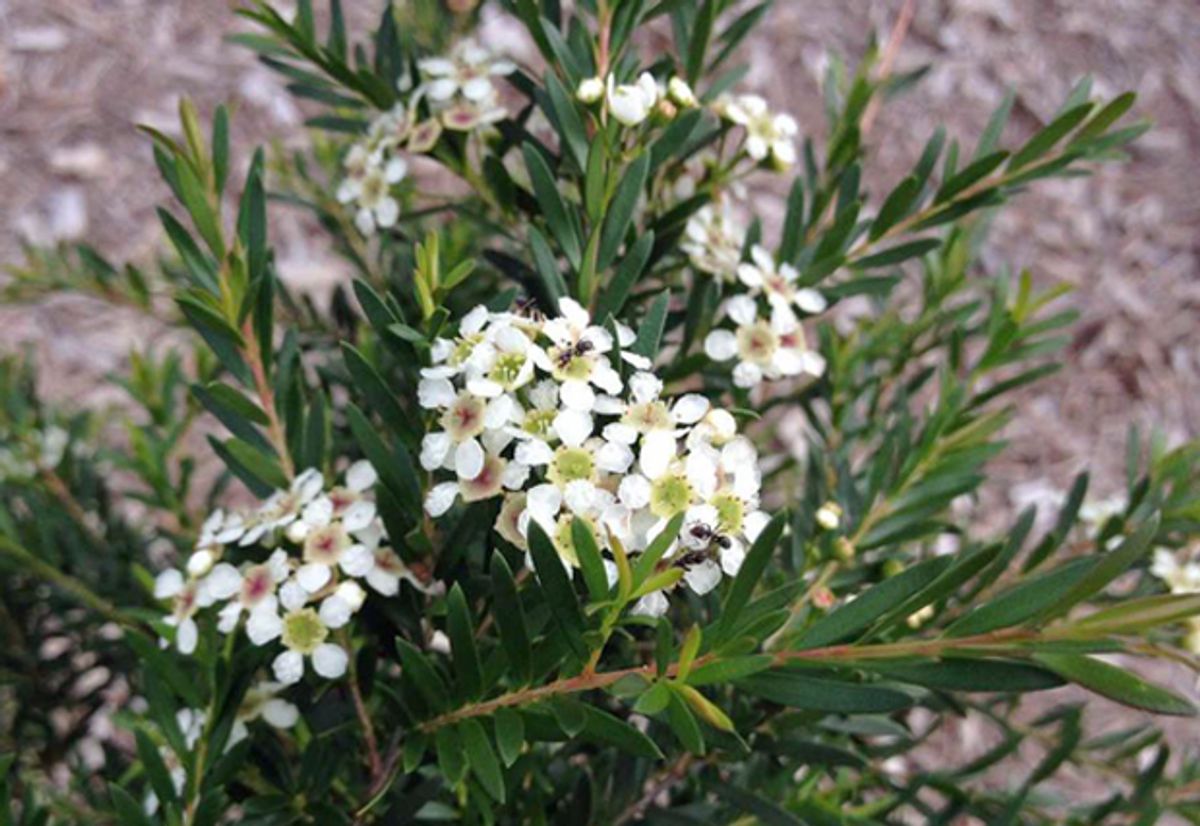
One of the species that despite having been in the Nursery catalog for some time, and currently available, is still a little-known and underused plant is Babingtonia virgata. The botanical classification of this species has varied since its identification; initially it was classified as a Leptospermum, so it has a certain number of synonyms such as Baeckea virgata, among others.
[Babingtonia virgata](http://www.salagraupera.com/es/cataleg/general/item/baeckea-virgata-2) is a perennial plant belonging to the Myrtaceae family. Native to Eastern Australia, it is a medium-sized shrub that in full development can reach about 100cm in height and width.
Flowering takes place from early summer and continues until the beginning of autumn. Its flowers are small and consist of five white petals. The foliage emerges on the numerous pendulous branches and consists of small lanceolate leaves of brilliant green color.
It is tolerant to various soil compositions, but they must be well-drained and neutral or slightly acidic soils. It is very resistant to water shortage, although it tolerates soils with some moisture as long as they are well-drained.
It is a medium-slow growing plant very easy to cultivate and with very low maintenance requirements, as its mound-like habit and compact growth habit greatly reduce pruning tasks. It likes to grow in full sun, although it can also be located in partial shade.
Its frost resistance is medium, tolerating temperatures down to -6°C. However, it is a species that does not tolerate saline environments so it is not recommended for seafront gardens. Its flowers are attractive to bees and butterflies.
It is resistant to pests and diseases if cultivated under the right conditions, as soils with excessive moisture or poor drainage can cause root rot. Therefore, it is advisable to wait until the soil is completely dry before watering again, as well as ensuring good drainage in the planting area. It should be fertilized in spring with a low-phosphorus fertilizer.
Due to its characteristics, it is a useful shrub as a medium-sized ground cover plant, as an edging in flower beds or in rock gardens. It can be grown in pots and is also used to create bonsai.
Images: gardensonline.com.au / regenerativedesigns.com.au / robinpowell.com.au