
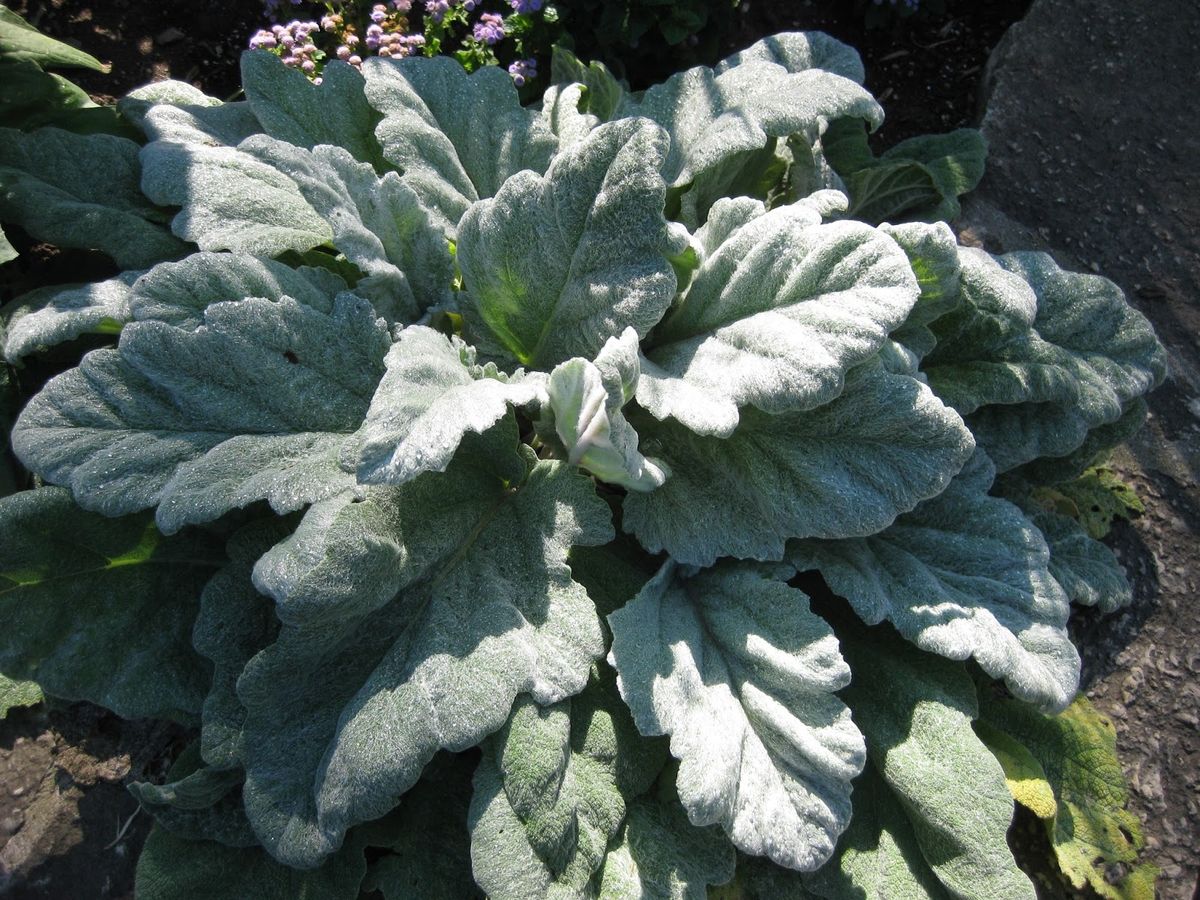
Salvia argentea is a new species that we are incorporating into our nursery. Popularly known as Hairy Sage, it belongs to the Lamiaceae family, native to southern Europe and North Africa. It is a perennial or biennial plant, with a rosette of evergreen corrugated gray-green leaves covered with a thick blanket of white hairs that serve to protect it from heat. The silvery leaves have a very decorative texture. It forms rosettes of wide and wavy basal leaves.
It is a herbaceous plant, its foliage can measure between 20/30 centimeters high and its inflorescence can reach 60/80 centimeters high.
It blooms from May to June, with numerous typical white labiate flowers, supported by strong branched inflorescences. We recommend cutting the inflorescence before seed creation, otherwise, the plant may die after dedicating all its energy to seed production.
Detail of the flower of Salvia argentea. Source: www.floraprotegida.org
It is a species belonging to hardiness zone number 7, with an average annual minimum temperature range of -17.7 / -12.3°C, showing resistance and being very strong. That is why it is an ideal species for high mountain summer homes, since during the cold winter it will not require any care and when good weather arrives it will bloom in all its splendor.
This species grows well regardless of soil nature, it tolerates limestone soil well. It also tolerates clay soils, it is a very good species for rock garden areas as its tolerance to stony terrain is very high. Also suitable for nutrient-poor soils.
It lives very well in places with full sun exposure and also in places subjected to very strong winds. Very useful in flower beds and borders due to its leaf coloration. This species frequently attracts many bumblebees during flowering season.
We recommend the months of September to December for planting, always avoiding the summer months as the plants could suffer strong water stress, it is also advisable to avoid the coldest months of the year such as January and February. It is advisable to use 4 to 5 plants per m2 to have almost total ground coverage in a not very prolonged period of time.